Daikin Aircon Remote Manual: A Comprehensive Guide
This guide details operation of Daikin remote controllers, covering installation, safety, features, troubleshooting, and pairing—ensuring optimal air conditioning performance.
Daikin remote controllers are integral to managing your air conditioning system, offering convenient and precise control over comfort settings. These controllers aren’t simply on/off switches; they are sophisticated interfaces designed for optimal performance and energy efficiency. Proper understanding of your remote is crucial for maximizing the benefits of your Daikin AC unit.
Before installation or operation, carefully review the provided installation and operation manuals. These resources train customers on proper usage and maintenance, ensuring longevity and preventing potential issues. Always utilize a licensed professional for installation to avoid complications and guarantee safety. Daikin offers a range of remote options, each tailored to specific AC models and functionalities, providing a user-friendly experience.
Understanding Remote Controller Symbols & Safety
Daikin remote controllers utilize symbols to convey important information regarding operation and safety precautions. Understanding these symbols – WARNING, CAUTION, and NOTE – is paramount for safe and effective use. WARNING alerts to potential hazards that could cause serious injury or death, while CAUTION indicates conditions that might lead to damage. NOTE provides helpful tips and additional information.
Installation should only be performed by qualified personnel. Incorrect installation can lead to malfunctions or unsafe conditions. Always consult a Daikin dealer for relocation or reinstallation. Be mindful of unsafe practices and adhere to all safety guidelines outlined in the manual. Prioritizing safety ensures both the longevity of your system and your well-being.
Daikin ARC452A4 Remote Control Overview
The Daikin ARC452A4 remote control is designed for intuitive operation of your air conditioning unit. This model, detailed in its operation manual, features a clear layout with dedicated buttons for power, mode selection (Cool, Heat, Auto), fan speed, and swing control. Key functions like Turbo, Quiet, Sleep Mode, and Timer/Cancel are readily accessible.
The face of the remote displays indicators for these modes, providing visual confirmation of your settings. It’s a wireless handset, simplifying usage. The manual emphasizes training customers on operation and maintenance, advising them to keep it with the installation manual for future reference.
Key Features of Daikin Remote Controls
Daikin remote controls boast several key features enhancing user comfort and control. Turbo Mode delivers rapid heating or cooling, quickly reaching desired temperatures. Quiet Mode minimizes operational noise, ideal for bedrooms or quiet environments. Sleep Mode gradually adjusts temperature during sleep, promoting energy efficiency and comfort.
Furthermore, the integrated Timer and Cancel functions allow for scheduled operation and easy cancellation of settings. These remotes often display indicators for active modes like Turbo, Quiet, and Sleep. Proper understanding of these features, as outlined in the operation manual, ensures optimal air conditioning performance and user satisfaction.
Turbo Mode Functionality
Turbo Mode on Daikin air conditioners provides a powerful and rapid heating or cooling solution. When activated, the unit operates at maximum capacity, quickly achieving the set temperature. This functionality is particularly useful when initially turning on the air conditioner in a hot or cold room, or when a swift temperature change is desired.
The remote controller typically features a dedicated “Turbo” button for easy activation. However, prolonged use of Turbo Mode may consume more energy. Refer to your Daikin remote control manual (like the BRC52A61/62/63 series) for specific details and recommended usage guidelines to optimize performance and efficiency.
Quiet Mode Operation
Daikin’s Quiet Mode is designed to minimize operating noise, creating a more peaceful indoor environment. This feature reduces fan speed and compressor noise, making it ideal for bedrooms, nurseries, or any space where a quiet atmosphere is preferred. Activation is usually achieved through a dedicated “Quiet” button on the remote controller, often indicated by a specific symbol.
While effective in reducing noise, Quiet Mode may slightly compromise cooling or heating performance. Consult your Daikin ARC452A4 remote control manual for specific details regarding Quiet Mode operation and its impact on temperature control. It’s a valuable feature for sensitive environments, balancing comfort and tranquility.
Sleep Mode Settings
Daikin’s Sleep Mode automatically adjusts temperature settings during the night to provide a comfortable sleeping environment and conserve energy. Typically, the system gradually increases the temperature in cooling mode or decreases it in heating mode over a pre-set period. This prevents drastic temperature fluctuations while you sleep, enhancing comfort.
The remote controller allows customization of Sleep Mode settings, including the duration and the degree of temperature adjustment. Refer to your Daikin remote control manual (BRC52A61/62/63) for specific options. Sleep Mode is activated via a dedicated button, often labeled “Sleep,” on the handset, promoting restful sleep and efficient energy use.
Timer and Cancel Functions
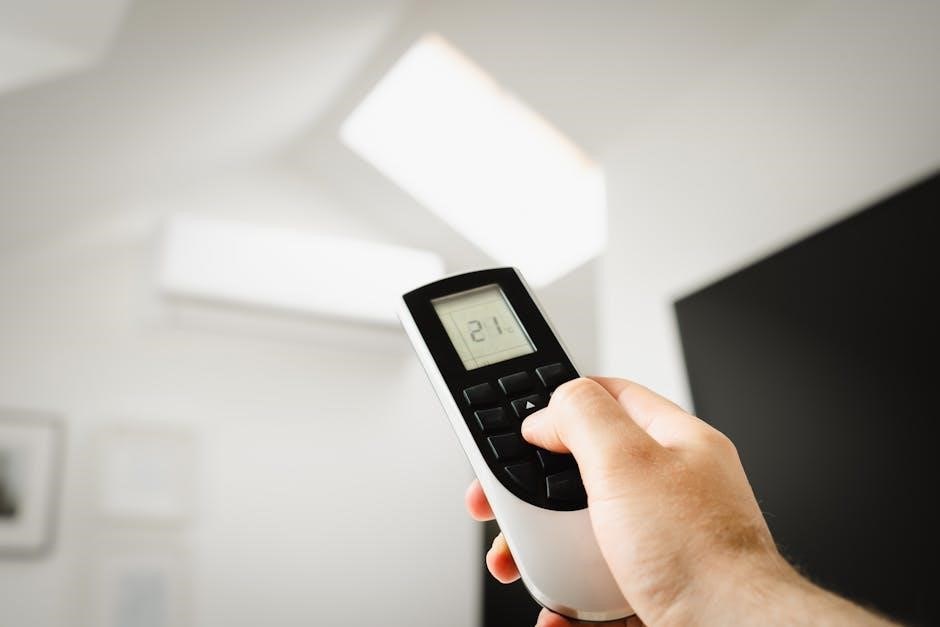
Daikin remote controls feature versatile timer functions for automated operation. Users can set timers to automatically turn the air conditioner on or off at specific times, enhancing convenience and energy savings. These timers can be programmed for one-time use or recurring schedules, adapting to daily routines;
The “Timer” and “Cancel” buttons on the remote facilitate these functions. Setting a timer involves selecting the desired time and mode, while the “Cancel” button halts any programmed timer. Proper use of these features allows for pre-cooling or pre-heating a space, ensuring comfort upon arrival or automatically shutting down the unit when not needed, optimizing efficiency.
Button Functions Explained
Daikin remote controllers utilize a clearly labeled button layout for intuitive operation. The “Power” button initiates on/off control, while “Mode Selection” allows cycling through Cool, Heat, and Auto settings. “Fan Speed Control” adjusts airflow intensity, offering options like Auto, Low, Medium, and High. The “Swing” function manages louver positioning for optimized air distribution throughout the room.
Understanding each button’s purpose is crucial for effective use. Additional buttons manage specialized features like Turbo mode and Quiet mode. Referencing the manual ensures proper utilization of all functionalities, maximizing comfort and efficiency. Familiarity with these controls unlocks the full potential of your Daikin air conditioning system.
Power (ON/OFF) Button
The Power button, prominently displayed on your Daikin remote, is the primary control for your air conditioning unit. A single press initiates the system, bringing it to life and activating your pre-selected settings. Pressing it again immediately shuts down the unit, returning it to standby mode. This simple action provides instant control over your indoor climate.
Ensure the unit is fully powered off when performing maintenance or troubleshooting. The Power button’s responsiveness confirms the remote’s connection to the indoor unit. If unresponsive, check battery levels or consider signal interference. Proper use of this button conserves energy and extends the lifespan of your Daikin system.
Mode Selection (Cool, Heat, Auto)
Daikin remote controls offer versatile mode selection, allowing you to tailor your air conditioning to specific needs. The ‘Cool’ mode lowers the room temperature, ideal for warm weather. ‘Heat’ mode provides warmth during colder seasons, utilizing the unit’s heating capabilities. ‘Auto’ mode intelligently adjusts between cooling and heating, maintaining a consistent, comfortable temperature based on your setpoint.
Selecting the appropriate mode optimizes energy efficiency and ensures optimal comfort. Auto mode is particularly useful for fluctuating temperatures. Regularly switching between modes extends the lifespan of your Daikin system, adapting to seasonal changes and maximizing performance.
Fan Speed Control
Daikin remote controls provide precise fan speed adjustments, enhancing comfort and energy savings. Typically, options include ‘Auto’, ‘Low’, ‘Medium’, and ‘High’ settings. ‘Auto’ automatically adjusts fan speed based on the temperature difference between the room and the setpoint. Lower speeds conserve energy and minimize noise, while higher speeds provide rapid cooling or heating.
Experimenting with fan speeds allows you to find the optimal balance between comfort and efficiency. Utilizing lower fan speeds when possible reduces energy consumption and creates a quieter environment. Consistent fan speed adjustments contribute to a more comfortable and cost-effective indoor climate.
Swing Function Control
Daikin remote controls feature a swing function, distributing air evenly throughout the room. This function controls the louvers, directing airflow vertically or horizontally. Options typically include ‘Auto’, ‘Vertical Swing’, ‘Horizontal Swing’, and ‘Fixed’. ‘Auto’ automatically oscillates the louvers for widespread circulation. Selecting ‘Vertical’ or ‘Horizontal’ focuses airflow in a specific direction.
The ‘Fixed’ setting locks the louvers in a chosen position, ideal for directing air towards a specific area. Utilizing the swing function ensures consistent temperature distribution, eliminating hot or cold spots. Proper adjustment of the swing function enhances overall comfort and optimizes air conditioning efficiency.
BRC52A61/62/63 Remote Control Specifics
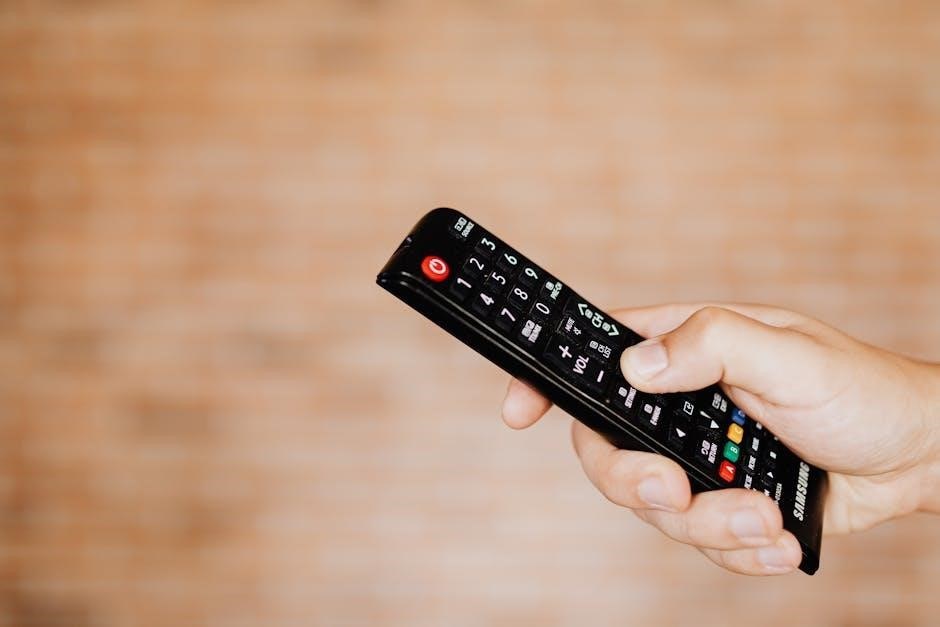
The BRC52A61/62/63 series Daikin remote controllers are widely used for their versatility and user-friendly interface. These models feature clear button labeling for functions like ‘Turbo’, ‘Quiet’, ‘Sleep Mode’, ‘Timer’, and ‘Cancel’. The display indicates the current settings, including temperature, mode, and fan speed. These remotes support both heating and cooling operations, offering precise temperature control.
They also include a clock setting function for accurate timer programming. Compatibility extends to various Daikin air conditioning units, ensuring broad applicability. Detailed operation manuals (like OM-GS02-0416) provide comprehensive guidance for maximizing functionality and troubleshooting common issues.
Setting the Clock on Your Daikin Remote
Accurate time setting is crucial for utilizing the timer and scheduling functions effectively on your Daikin remote (BRC52A61/62/63). Typically, you’ll locate a ‘Clock’ button on the remote’s faceplate. Pressing this initiates the clock setting mode. Use the temperature up/down buttons to adjust the hour, then press ‘Clock’ again to move to minute adjustment. Continue using the up/down buttons to set the correct minutes.
Pressing ‘Clock’ a final time confirms the setting. Ensure the remote has a stable signal with the air conditioning unit. Refer to your specific model’s operation manual (OM-GS02-0416) for detailed, step-by-step instructions, as procedures can vary slightly.
Troubleshooting Common Remote Control Issues
Facing issues with your Daikin remote? A non-responsive remote often stems from depleted batteries – replace them first. If problems persist, ensure there’s a clear line of sight between the remote and the indoor unit, removing any obstructions. Incorrect function operation might indicate a pairing issue; try resetting the remote (see pairing section).
Verify the remote isn’t accidentally set to a different unit or mode. Consult the operation manual (OM-GS02-0211) for specific error codes or troubleshooting steps. If issues remain unresolved, contact Daikin support for assistance.
Remote Not Responding
If your Daikin remote isn’t responding, the first step is always to check the batteries. Ensure they are fresh and correctly installed, observing the polarity. A weak signal can also be caused by obstructions between the remote and the indoor unit – remove anything blocking the path.
Confirm the remote is directed towards the air conditioner’s receiver. Try resetting the remote following the pairing instructions. If the issue continues, consult the manual (OM-GS02-0416) for specific troubleshooting guidance. A faulty remote may require replacement; contact Daikin support for assistance.
Incorrect Operation of Functions
When Daikin remote functions operate incorrectly, verify you’ve selected the correct mode (Cool, Heat, Auto). Double-check the set temperature and fan speed. Incorrect settings are a common cause of unexpected behavior. Ensure the ‘Timer’ and ‘Cancel’ functions aren’t active, as these can override your desired settings.
If problems persist, consult the operation manual (OM-GS02-0211) for detailed explanations of each button’s function. Resetting the remote (BRC52A61/62/63) might resolve software glitches. For complex issues, contact a licensed installer or Daikin support for professional assistance.
Wireless Remote Control Pairing & Resetting
Pairing a Daikin remote ensures it communicates correctly with your air conditioning unit. If the remote isn’t responding, pairing may be necessary, though specific procedures vary by model (ARC452A4, BRC52A61/62/63). Resetting the remote can resolve minor operational issues. Typically, this involves removing and reinserting the batteries, or pressing a specific button combination.

Consult your Daikin installation manual (OM-GS02-0416) for detailed, model-specific pairing and resetting instructions. Improper pairing can lead to functionality loss. If issues persist after attempting these steps, contact a qualified technician or Daikin support for further guidance.
Battery Replacement & Maintenance
Maintaining your Daikin remote involves regular battery checks and replacements. Use only the specified battery type (typically AAA or AA) to avoid damage or malfunction. When replacing, ensure correct polarity (+ and -). Low batteries can cause erratic behavior or a complete loss of signal. Periodically clean the remote’s surface with a soft, dry cloth to remove dust and grime.
Avoid exposing the remote to extreme temperatures or direct sunlight. Store it in a dry place when not in use. Proper battery maintenance and gentle cleaning contribute to the longevity and reliable operation of your Daikin remote control.
Downloading Daikin Remote Control Manuals (PDF)
Accessing Daikin remote control manuals in PDF format is straightforward. Visit the official Daikin website and navigate to the support or downloads section. Search for your specific remote control model number (e.g., BRC52A61/62/63, ARC452A4) to locate the corresponding manual. These manuals provide detailed instructions on operation, troubleshooting, and safety precautions.
Downloading the PDF allows offline access and convenient printing. Ensure you download the correct manual for your model to guarantee accurate information. Daikin also often provides manuals for older models, offering a valuable resource for maintaining your air conditioning system effectively.
Finding Support & Contacting Daikin
For further assistance beyond the manuals, Daikin offers multiple support channels. Begin by exploring the comprehensive FAQ section on their official website, addressing common remote control issues. If you require direct support, locate the “Contact Us” page to find regional contact information.
Daikin provides phone numbers, email addresses, and often a live chat option for immediate assistance. When contacting support, have your remote control model number readily available. Consider consulting a licensed installer or contractor for complex issues or relocation/reinstallation needs, as recommended by Daikin.