World War I DBQ Answer Key PDF: A Comprehensive Plan
This PDF guide offers students and educators a structured approach to analyzing WWI documents. It enhances critical thinking, historical skills, and DBQ essay confidence.
Understanding the DBQ Format
Document-Based Questions (DBQs) are a cornerstone of historical assessment, demanding more than rote memorization. They require students to analyze primary and secondary sources – documents – to construct an argument and support it with evidence. A WWI DBQ specifically challenges students to grapple with the complex causes, events, and consequences of the Great War.
The format typically presents a question, followed by a set of documents. These documents can include letters, speeches, political cartoons, treaties, and statistical data. Crucially, students aren’t expected to already know the answer; the documents are the evidence they use to formulate a response.
Success hinges on skills like sourcing (evaluating the author and context), contextualization (placing the document within its historical setting), close reading, and synthesis – combining document evidence with outside information. A strong DBQ response isn’t just a summary of the documents; it’s a well-reasoned argument, skillfully supported by textual evidence, demonstrating a deep understanding of the historical period. The PDF answer key provides a model for this process.
The Core Question: Causes of World War I
The central inquiry driving a WWI DBQ often revolves around identifying the primary causes of the conflict. Was it a single event, like the assassination of Archduke Franz Ferdinand, or a confluence of long-term factors? The DBQ format compels students to move beyond simplistic answers.
Key contributing factors frequently explored include the rise of nationalism, particularly in the volatile Balkans, and the intense competition fueled by imperialism – the scramble for colonies and resources. Militarism, the aggressive build-up of armed forces, and the complex web of alliance systems also played critical roles.
A comprehensive answer acknowledges the interplay of these forces. The PDF answer key will demonstrate how to analyze documents revealing these tensions. Students must evaluate whether certain causes were more significant than others, and how they interconnected to create a climate ripe for war. The question isn’t simply what caused WWI, but how and why these factors led to such a devastating outcome.
Document Analysis: Key Skills
Effective DBQ responses hinge on strong document analysis skills. Students must move beyond simply reading the documents; they need to actively interpret them. This involves identifying the main idea, understanding the author’s purpose, and recognizing any inherent biases or limitations.
The WWI DBQ answer key PDF emphasizes techniques like sourcing – determining the document’s origin and potential influence. Is it a primary or secondary source? Who created it, and why? Contextualization is also crucial – placing the document within its historical setting to understand its significance.

Furthermore, students must be able to corroborate evidence across multiple documents, identifying points of agreement and disagreement. The PDF guide will illustrate how to extract relevant information, synthesize it into a coherent argument, and avoid simply summarizing the documents. Mastering these skills is paramount for achieving a high score on the DBQ.
Document 1: Nationalism in the Balkans
The first document typically focuses on the volatile situation in the Balkans, a region rife with nationalist aspirations in the early 20th century. The WWI DBQ answer key PDF highlights how intense national pride and the desire for self-determination fueled tensions between various ethnic groups – Serbs, Bosnians, Croats, and others.
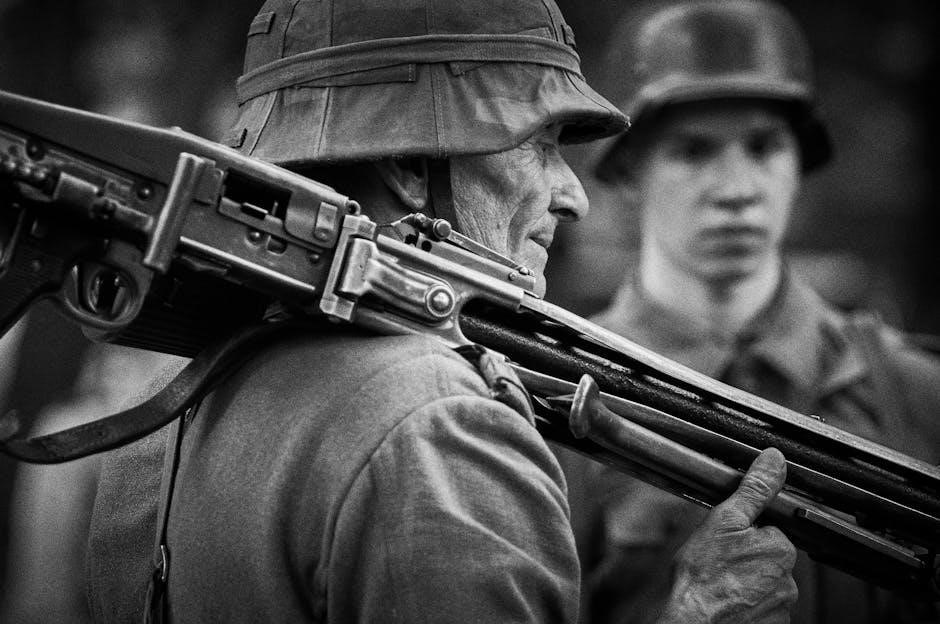
This document will likely showcase examples of nationalist propaganda, political movements advocating for independence, or accounts of ethnic clashes. Students must analyze how this fervent nationalism destabilized the Austro-Hungarian Empire, creating a powder keg ready to explode.
The PDF guide will prompt students to consider the document’s perspective: was it written by a nationalist sympathizer, an imperial official, or a neutral observer? Understanding this bias is key to interpreting the document’s message accurately. It demonstrates how nationalism acted as a significant long-term cause of the war.

Document 2: The Role of Imperialism
Document two within the WWI DBQ answer key PDF usually examines the impact of imperialism on escalating tensions among European powers. It illustrates how the competition for colonies – particularly in Africa and Asia – created economic and political rivalries.
This document may present statistics on colonial possessions, maps illustrating imperial holdings, or excerpts from speeches justifying imperial expansion; Students are guided to analyze how this scramble for empire fostered distrust and animosity between nations like Britain, France, and Germany.
The PDF emphasizes understanding imperialism as an “unequal relationship” involving domination and subordination. It prompts students to assess how imperial ambitions contributed to a climate of aggression and a willingness to use force to protect economic interests. Analyzing the source’s origin – a colonial administrator, a business leader, or an anti-imperialist activist – is crucial for contextualization.
Document 3: Militarism and the Arms Race
Document three in the WWI DBQ answer key PDF focuses on the pervasive militarism of the early 20th century and the escalating arms race among European nations. It typically presents evidence of increased military spending, naval build-up (particularly between Britain and Germany), and the glorification of military power.
The PDF guides students to analyze charts showing military expenditure growth, excerpts from military leaders advocating for preparedness, or propaganda posters promoting military service. A key skill is recognizing how this arms race created a self-perpetuating cycle of fear and suspicion.
Students are prompted to consider how the belief in the necessity of military strength influenced political decision-making and contributed to a climate where war seemed increasingly inevitable. The answer key stresses evaluating the source’s perspective – a general, a politician, or a journalist – to understand potential biases and motivations.
Document 4: Alliance Systems – Entangling Commitments
Document four within the WWI DBQ answer key PDF centers on the complex web of alliances that characterized pre-war Europe. These alliances – like the Triple Alliance (Germany, Austria-Hungary, Italy) and the Triple Entente (France, Russia, Great Britain) – were intended to provide security, but ultimately contributed to the rapid escalation of the conflict.
The PDF typically includes excerpts from treaty agreements, diplomatic correspondence, or maps illustrating the alliance networks. Students are guided to analyze how these alliances created a system of “entangling commitments,” meaning that a conflict between two nations could quickly draw in others.
The answer key emphasizes understanding how the alliance system transformed a regional dispute (the assassination in Sarajevo) into a global war. Students learn to assess the motivations behind the alliances – fear, national interest, or a desire for power – and to evaluate their impact on the outbreak of hostilities.
Document 5: The Assassination of Archduke Franz Ferdinand
Document five, crucial to the WWI DBQ, focuses on the assassination of Archduke Franz Ferdinand of Austria-Hungary in Sarajevo on June 28, 1914. The DBQ answer key PDF presents primary source materials like news reports, eyewitness accounts, or official statements related to the event and its immediate aftermath.
Students analyze how this single act of violence triggered a chain reaction, leading to Austria-Hungary’s ultimatum to Serbia and, subsequently, declarations of war. The key emphasizes understanding the context – Serbian nationalism, Austro-Hungarian control over Bosnia, and the Black Hand terrorist group.
The PDF guides students to evaluate the significance of the assassination not as the sole cause of the war, but as the catalyst that ignited pre-existing tensions. It prompts analysis of how different nations reacted to the event and how those reactions were shaped by their existing alliances and strategic interests.
Point of View (POV) Analysis in DBQ Documents
A core skill highlighted in the WWI DBQ answer key PDF is Point of View (POV) analysis. Students learn to identify the author’s perspective, considering their background, position, and potential biases when interpreting each document. The PDF stresses that no source is entirely neutral.
For example, a German military leader’s account of events will differ significantly from a British civilian’s diary entry. The key provides guiding questions: Who created this document? What was their purpose? How might their position have influenced their interpretation of events?
The PDF emphasizes that recognizing POV isn’t about dismissing a source, but about understanding its limitations and corroborating information with other sources. Students are taught to articulate how a specific POV shapes the document’s content and how that impacts its usefulness as historical evidence.
Sourcing Documents: Evaluating Reliability

The WWI DBQ answer key PDF places significant emphasis on sourcing – critically evaluating the reliability of each document. It moves beyond simply identifying the author to assessing the document’s purpose, intended audience, and potential biases. Students are guided to ask: Why was this document created? What agenda might the author have had?
The PDF details how to assess a source’s proximity to the event. A firsthand account (like a soldier’s letter) is generally more valuable for understanding immediate experiences than a secondary source written decades later. However, even firsthand accounts can be biased by personal feelings or limited perspectives.

The guide stresses corroboration: comparing information across multiple documents to identify consistent patterns and discrepancies. Discrepancies don’t necessarily invalidate a source, but they signal the need for further investigation and nuanced interpretation. Ultimately, the PDF aims to equip students to make informed judgments about source credibility.
Contextualization: Placing Events in Historical Perspective
A key component of the World War I DBQ answer key PDF is contextualization – understanding events within their broader historical framework. The guide emphasizes that the causes of WWI weren’t isolated incidents but rather the culmination of long-term trends and interconnected factors.
Students are prompted to consider the political climate of early 20th-century Europe, including the rise of nationalism, imperialism, and militarism. The PDF highlights how these forces created a volatile environment ripe for conflict. It stresses the importance of understanding the complex alliance system and its role in escalating a regional dispute into a global war.
The guide encourages students to connect the documents to broader historical themes and patterns. For example, analyzing the role of imperialism requires understanding the scramble for colonies and its impact on international relations. Effective contextualization demonstrates a sophisticated understanding of history beyond the immediate topic.

Developing a Strong Thesis Statement
The World War I DBQ answer key PDF places significant emphasis on crafting a robust thesis statement. It clarifies that a strong thesis doesn’t merely state a topic, but presents a historically defensible claim about the causes of the war, supported by evidence from the documents.
The guide advises students to move beyond simplistic explanations and acknowledge the multifaceted nature of the conflict. A good thesis should address the relative importance of various factors – nationalism, imperialism, militarism, and alliances – and articulate a clear argument about their interplay.
The PDF provides examples of effective and ineffective thesis statements, illustrating how to avoid vague language and generalizations. It stresses the importance of making an argument that can be demonstrably supported by the provided documents, forming the core of a successful DBQ response.
The World War I DBQ answer key PDF details a clear essay structure. The introduction should include context, a thesis statement, and a roadmap of the argument. Body paragraphs must focus on specific documents, explaining their relevance to the thesis and utilizing the HIPP (Historical context, Intended audience, Purpose, Significance) method.
The guide emphasizes that each body paragraph should not simply summarize a document, but analyze it – explaining how it supports the thesis. It advocates for grouping documents thematically, rather than addressing them individually, to demonstrate a deeper understanding of the historical forces at play.
Finally, the conclusion should restate the thesis in a new way, summarize the main points, and potentially broaden the implications of the argument. The PDF stresses avoiding introducing new information in the conclusion and ensuring a cohesive, well-supported response.
Using Evidence from Documents Effectively
The World War I DBQ answer key PDF highlights the importance of skillful evidence integration. Simply dropping quotes isn’t enough; students must explain how the document supports their claim. The guide recommends using specific details from the document – phrases, statistics, or perspectives – to bolster arguments.

It stresses avoiding “generic” statements that could apply to any document. Instead, focus on the unique aspects of each source. The PDF advises students to connect the document’s content directly to the thesis statement, demonstrating a clear line of reasoning.
Furthermore, the key emphasizes the need to go beyond surface-level observations. Students should analyze the document’s author, purpose, and historical context to fully understand its significance and how it contributes to the overall argument. Effective evidence usage is crucial for a high-scoring DBQ.
Outside Information: Enhancing the Argument
The World War I DBQ answer key PDF underscores that strong responses aren’t solely reliant on provided documents. Incorporating relevant outside information demonstrates a broader understanding of the historical context and strengthens the argument significantly.
The guide suggests recalling key events, figures, or concepts not explicitly mentioned in the documents – for example, detailing the Schlieffen Plan or the impact of new technologies like machine guns. This contextualization shows the student’s depth of knowledge.
However, the PDF cautions against simply “dumping” facts. Outside information must be directly connected to the thesis and used to support claims made using the documents. It should enhance, not distract from, the core argument. A well-integrated understanding of the era elevates a DBQ response from competent to exceptional.
Common Mistakes to Avoid in WWI DBQs
The World War I DBQ answer key PDF highlights frequent errors students make. A primary pitfall is simply summarizing documents instead of analyzing them – the focus should be on what the document reveals about the causes of the war, not just what it says.
Another common mistake is failing to properly address the prompt. Students sometimes write about WWI generally, rather than directly answering the specific question posed. The PDF stresses the importance of a clear, focused thesis statement.

Insufficient sourcing and failing to consider Point of View (POV) are also flagged. Documents aren’t neutral; understanding the author’s bias is crucial. Finally, the guide warns against neglecting outside information, as it demonstrates a limited understanding of the historical landscape. Avoiding these errors leads to a stronger, more persuasive DBQ essay.